Remote Jobs You Can Do While Traveling the World
The dream of waking up in a beachfront villa in Bali or a cozy apartment in Lisbon while maintaining a steady income is no longer reserved for the ultra-wealthy or tech geniuses. In 2026, the landscape of work has fundamentally shifted, making remote jobs you can do while traveling the world more accessible than ever before.
Whether you are a seasoned professional or a complete beginner looking to escape the 9-to-5 grind, the global economy now prizes results over physical presence. This shift has opened the floodgates for “digital nomads,” individuals who leverage technology to perform their job duties from anywhere on the planet with a stable internet connection.
Transitioning to a nomadic lifestyle requires more than just a passport and a laptop; it requires a strategic approach to finding online jobs while traveling that offer both flexibility and financial stability. Many people assume they need to be software developers to work remotely, but the truth is far more diverse. From creative writing and digital marketing to administrative support and virtual teaching, there is a niche for almost every skill set.
This guide is designed to serve as your roadmap, helping you navigate the complexities of the remote job market, identify roles that best suit your personality, and equip you with the tools to succeed in a borderless professional environment.
If you have ever felt trapped at a desk, this is your sign to explore work while traveling. The freedom to choose your own environment can lead to increased productivity, lower stress levels, and a significantly higher quality of life.
However, it is important to approach this journey with realistic expectations. In the following sections, we will break down exactly what these roles look like, how much you can expect to earn, and the practical steps you need to take to turn your travel dreams into a sustainable reality. Let’s dive into the world of remote work and discover how you can fund your adventures across the globe.
What Are Remote Jobs for Digital Nomads?
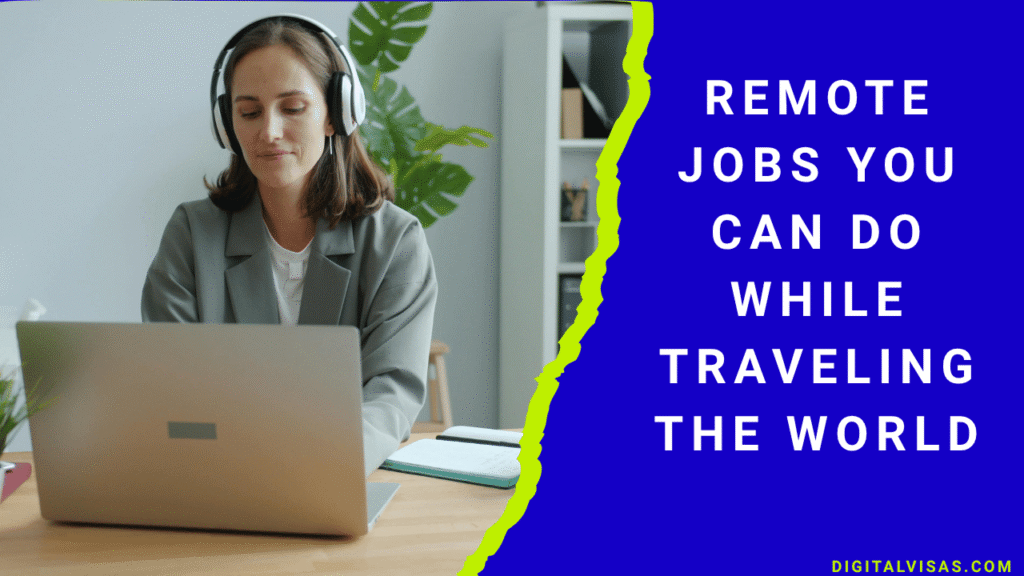
When we talk about remote jobs for digital nomads, we mean positions that are entirely location-independent. Unlike a “hybrid” role that might require you to be in an office two days a week, a true nomad-friendly job allows you to be in a different country every month if you so choose. These roles are typically categorized into two main types: employee-based remote work and freelance/contract work.
Employee-based roles offer the security of a steady paycheck, health benefits (sometimes international), and a structured environment, though they may require you to overlap with specific time zones for meetings. On the other hand, freelancing offers the ultimate freedom of schedule but requires more self-discipline and “hustle” to maintain a consistent flow of clients.
The core philosophy of these jobs is that “work is something you do, not a place you go.” For a digital nomad, the office might be a co-working space in Mexico City, a quiet library in Tokyo, or even a campervan parked in the Swiss Alps. To make this work, companies use cloud-based collaboration tools such as Slack, Zoom, and Asana to ensure communication remains seamless regardless of geographic distance. As a beginner, it is crucial to understand that while these jobs offer immense freedom, they also require a high level of professional maturity. You are responsible for managing your own time, ensuring your internet connection is reliable, and delivering high-quality results without a manager hovering over your shoulder.
Income potential in this sector varies wildly. Some entry-level roles might start at $15–$20 per hour, while specialized consultants or senior developers can command six-figure salaries while hopping between continents. The key to success is identifying a skill that can be delivered digitally. If your output can be sent via email, uploaded to a server, or discussed over a video call, it can likely be turned into a remote career. This accessibility is what makes the nomad lifestyle so appealing to people in India, the UK, the USA, and beyond, as it allows individuals to earn in a stronger currency while living in areas with a lower cost of living a strategy known as geographic arbitrage.
Best Remote Jobs You Can Do While Traveling
Identifying the right role is the first step toward your global journey. The “best” job is subjective, but generally, it is one that balances high pay with a flexible schedule. For those looking for remote jobs you can do while traveling the world, certain industries have proven more “nomad-friendly” than others.
These roles often have established workflows for remote teams, meaning you won’t be the “odd one out” when you join a meeting from a different time zone. We will explore several categories, from high-stakes technical roles to creative and administrative positions that are perfect for those just starting out.
Freelance Writing and Content Creation
Freelance writing remains one of the most popular online jobs while traveling because of its low barrier to entry and extreme flexibility. As a writer, your primary tool is your brain and a keyboard. Companies everywhere need blog posts, whitepapers, newsletters, and social media copy to stay competitive.
You can start by pitching to digital publications or joining platforms like Upwork and Fiverr. The beauty of writing is that it is often “asynchronous,” meaning you don’t have to be online at the same time as your client. As long as you hit your deadlines, your client won’t care if you wrote the article at 2 AM in a hostel in Thailand or 10 AM in a café in Paris. Expect to earn anywhere from $0.05 to $0.50 per word, depending on your expertise and niche.
Digital Marketing Specialist
Digital marketing is a broad field that encompasses SEO (Search Engine Optimization), SEM (Search Engine Marketing), and social media management. Because all marketing results are tracked digitally through tools like Google Analytics or Facebook Ads Manager, there is zero need to be in a physical office.
As a digital marketer, you help businesses increase their online visibility and sales. This role is highly result-oriented, which is perfect for travelers; if you can prove your campaigns are generating ROI, clients will be happy to keep you on a monthly retainer. This provides the “recurring income” that is vital for long-term travel. Specialists often earn between $3,000 and $7,000 per month, making it a lucrative path for those willing to learn the technical side of the web.
Virtual Assistant (VA)
If you are highly organized and enjoy helping others succeed, becoming a Virtual Assistant is an excellent entry point. VAs handle administrative tasks such as email management, scheduling appointments, data entry, and basic customer service. Many entrepreneurs and small business owners are overwhelmed by these daily tasks and are willing to pay someone $20–$40 per hour to take them off their plate.
While some VA roles require you to be online during specific hours, many allow for flexible scheduling. This is a fantastic “learn-while-you-earn” job because you get an inside look at how online businesses operate, which can eventually lead to higher-paying consultancy roles or your own business venture down the road.
High-Paying Remote Jobs
For those who want to travel in luxury or save a significant portion of their income, high-paying remote roles are the goal. These positions usually require specialized education, years of experience, or a highly technical skill set. However, the reward is a salary that rivals (or exceeds) that of traditional office jobs in major cities like New York or London.
When you combine a high salary with the lower cost of living in countries like Vietnam or Portugal, your purchasing power skyrockets, allowing you to live a premium lifestyle while building a massive nest egg for the future.
Software Developer and Programmer
Software development is the gold standard for high-paying remote jobs for digital nomads. Whether you specialize in Front-end, Back-end, or Full-stack development, your skills are in global demand. Companies are desperate for talent and are often willing to offer fully remote contracts with six-figure salaries to secure the best coders. The nature of coding, deep focus, and clear deliverables lend themselves perfectly to remote work.
You can work on a sprint in a co-working space and push your code to GitHub from anywhere. Senior developers often earn upwards of $100,000–$150,000 per year. Even junior developers can start at $60,000, providing more than enough to travel the world comfortably while building essential tech infrastructure.
Cybersecurity Analyst
As the world moves more data online, the need to protect that data has become a multi-billion-dollar industry. Cybersecurity analysts monitor networks for threats, perform audits, and implement security protocols. This is a high-responsibility role that can be performed entirely through a secure VPN and remote monitoring tools. Because the stakes are so high, companies pay a premium for reliability and expertise.
Most cybersecurity professionals need certifications like CompTIA Security+ or CISSP. The average salary for a remote cybersecurity role ranges from $80,000 to $130,000. It is an ideal career for detail-oriented problem-solvers, offering a stable, high-income path for long-term travelers.
UX/UI Designer
User Experience (UX) and User Interface (UI) designers are responsible for making digital products intuitive and visually appealing. If you have an eye for design and an interest in human psychology, this is a fantastic, high-paying remote option. Designers use tools like Figma, Adobe XD, and Sketch to create wireframes and prototypes. Since these tools are cloud-based, collaboration with developers and stakeholders is easy.
Experienced UX designers can earn between $70,000 and $120,000 per year. The demand for great design is universal across apps, websites, and software platforms, ensuring you will always have job opportunities wherever you set up your laptop for the day.
Beginner-Friendly Remote Jobs
Not everyone starts their journey with a computer science degree or a decade of marketing experience. If you are just starting out and need to find work while traveling, there are plenty of options available for jobs that don’t require years of training. These roles focus more on your communication skills, empathy, and willingness to learn.
While the starting pay might be lower than in software engineering, these jobs provide the perfect foundation for a nomadic lifestyle and offer plenty of room for advancement as you gain experience and build your professional network.
Online ESL Tutor
Teaching English as a Second Language (ESL) is a classic digital nomad job. Platforms like Cambly, Preply, and VIPKid connect fluent English speakers with students worldwide. In most cases, you don’t even need a teaching degree; a TEFL (Teaching English as a Foreign Language) certificate is often enough to get started. You can set your own hours and work as much or as little as you like. Most tutors earn between $15 and $25 per hour.
It’s a rewarding way to interact with people from different cultures while funding your travels. The only catch is that you need a very stable and fast internet connection for high-quality video calls, so check the Wi-Fi speed before booking your accommodation.
Customer Support Representative
Many tech companies, especially startups, hire remote customer support teams to provide 24/7 coverage for their users. If you are patient, a good communicator, and tech-savvy enough to learn helpdesk software like Zendesk or Intercom, this is a great beginner role. Many companies actually prefer a distributed team across different time zones so they can offer “follow-the-sun” support without requiring employees to work night shifts.
Entry-level salaries usually range from $30,000 to $45,000 per year. It provides a steady paycheck and often comes with the perks of a full-time employee, such as paid time off and equipment stipends, making it a very secure way to start your life as a digital nomad.
Data Entry Specialist
Data entry is perhaps the most straightforward online job while traveling. It involves inputting information into databases, spreadsheets, or CRM systems. While it can be repetitive, it requires very little previous experience and can be done during your “downtime” between sightseeing. You can find these tasks on sites like Clickworker or Amazon Mechanical Turk, or land more stable part-time roles on Upwork.
Pay is typically on the lower end, usually $12–$18 per hour, but it is a reliable way to supplement your income. For many beginners, data entry is the “stepping stone” that proves they can manage remote work before they move on to more complex roles like virtual assistance or project management.
Skills Required for Remote Jobs
To succeed in the world of remote jobs for digital nomads, you need a blend of “hard” technical skills and “soft” interpersonal skills. Hard skills are the specific abilities you need to perform your job, such as coding in Python, using Photoshop, or running Google Ads.
However, in a remote environment, soft skills are often what determine whether you keep your job or get fired. Because your manager can’t see you working, they must trust you completely. This means your communication must be proactive, your time management must be flawless, and your ability to solve problems independently must be top-notch.
Self-discipline is the most critical soft skill for any traveler. When you are in a beautiful new city, the temptation to skip work and go exploring is immense. Successful nomads create strict boundaries and schedules to ensure their work is completed to a high standard. Additionally, digital literacy is non-negotiable. You must be comfortable troubleshooting your own technical issues, such as a failing VPN or a buggy video conferencing app. If you can’t fix a simple technical glitch, you could lose a day of work or miss an important meeting, which is a major risk when your office is a café in a foreign country.
Finally, adaptability is key. Working while traveling means dealing with unexpected power outages, fluctuating internet speeds, and noisy environments. You need the ability to remain calm and find solutions under pressure. Learning to use project management tools like Trello, communication platforms like Slack, and time-tracking software like Clockify will give you a professional edge.
If you are a beginner, spend time mastering these “remote-first” tools before you leave. Being the person who knows how to navigate a complex digital workspace makes you an asset to any remote team, regardless of your specific job title.
How to Get Started
Transitioning to a life of online jobs while traveling doesn’t happen overnight; it requires a systematic approach. The first step is to perform a “skills audit.” What can you do right now that someone would be willing to pay for? If the answer is “not much,” then your first task is to spend 3–6 months upskilling. Take online courses on platforms like Coursera, Udemy, or LinkedIn Learning. Once you have a basic skill set, you need to build a “digital footprint.”
This includes a professional LinkedIn profile, a portfolio website (if you’re a creative), or a GitHub repository (if you’re a developer). You need to prove to potential employers that you can deliver value remotely.
Next, start small. Don’t quit your day job and book a flight to Thailand immediately. Start by taking on small freelance projects on the side or asking your current employer if you can work from home one or two days a week. This “test phase” allows you to work out the kinks in your workflow. It also helps you build a financial cushion. Most experts recommend saving at least 3–6 months of living expenses before going fully nomadic.
This “runway” ensures that if a client drops you or you have an emergency, you aren’t stranded in a foreign country without funds. Once you have a consistent stream of remote income that covers your basic costs, you are ready to book that one-way ticket.
Networking is your secret weapon. Join digital nomad communities on Facebook, Discord, or Reddit. Attend webinars and virtual meetups related to your industry. Many remote jobs you can do while traveling the world are never posted on public job boards; they are filled through referrals and word of mouth.
By connecting with people who are already living the lifestyle, you can get “insider” tips on which companies are hiring and which cities have the best infrastructure for remote workers. Remember, your goal is to build a sustainable career, not just a temporary vacation funded by odd jobs. Treat your remote career with the same seriousness as an office-based one, and the world will become your office.
Where to Find Remote Jobs
Finding the right platform is half the battle. While LinkedIn is great, there are dedicated job boards specifically for remote digital nomad jobs. These sites filter out roles that require office attendance, saving you hours of searching. Some of the most popular dedicated remote job boards include We Work Remotely, Remote OK, and FlexJobs.
These platforms host roles ranging from entry-level customer support to high-level executive positions. Because these sites are well-known, competition can be high, so make sure your resume and cover letter are tailored specifically to the remote aspects of the role, highlighting your ability to work independently.
For freelancers, platforms like Upwork and Fiverr are the go-to choices. Upwork is generally better for long-term contracts and professional services, while Fiverr is great for “gig” based work like logo design or voiceovers. Another great strategy is to look at niche job boards. For example, if you are a designer, check Dribbble or Behance. If you are a writer, look at ProBlogger. Often, these smaller, specialized sites have less competition and higher-quality leads.
Don’t forget to check the “Careers” pages of the tech companies you admire; many, like GitLab, Buffer, and Zapier, are “remote-first” or “fully distributed,” meaning they have no head office at all and hire globally by default.
Social media can also be a goldmine if used correctly. Twitter (X) has a thriving community of tech and marketing professionals who often post job openings before they hit official boards. Search for hashtags like #RemoteJobs, #HiringRemote, or #DigitalNomadJobs. Additionally, join “Digital Nomad” groups on Facebook for specific regions (e.g., “Digital Nomads Bali” or “Digital Nomads Medellin”). These groups are often filled with entrepreneurs looking for VAs or local businesses needing help with their social media. By being active in these communities, you can find work while traveling to jobs that feel more like community partnerships than cold corporate contracts.
Tools You Need for Working While Traveling
Your gear is your lifeline. Without the right tools, your dream of working while traveling can quickly turn into a nightmare of missed deadlines and frustrated clients. The foundation of your toolkit is a high-performance laptop. Don’t skimp here; get something with a long battery life and enough processing power to handle your specific tasks. Along with your laptop, a universal power adapter is essential, as plug types change from country to country. A portable power bank that can charge a laptop (USB-C PD) is also a lifesaver for long bus rides or in areas with unreliable electricity.
Internet connectivity is the most critical factor. Never rely solely on hotel Wi-Fi. Invest in a high-quality international travel eSIM (such as Airalo or Holafly) or a portable Wi-Fi hotspot (such as Skyroam or GlocalMe). These devices ensure you have a backup connection if the local Wi-Fi fails. For your software stack, a reliable VPN (Virtual Private Network) like NordVPN or ExpressVPN is mandatory. A VPN protects your data on public Wi-Fi networks and allows you to access websites or company portals that might be geo-restricted to your home country. Noise-canceling headphones are also vital for taking meetings in busy cafés or co-working spaces.
Organizationally, you need cloud storage, such as Google Drive or Dropbox, to ensure your files are backed up and accessible from any device. For communication, familiarize yourself with Slack and Zoom, the industry standards.
Time zone management is another hurdle; tools like “World Time Buddy” or “Figure it Out” (a browser extension) help you keep track of what time it is for your clients and colleagues. Finally, consider a portable laptop stand and an external mouse/keyboard. While they take up extra space in your bag, they are essential for maintaining good ergonomics and preventing back pain during long work sessions in non-traditional “offices.”
Challenges of Working While Traveling
While the lifestyle sounds glamorous, it comes with unique challenges that can lead to burnout if not managed properly. The biggest hurdle for most online jobs while traveling is the “Time Zone Trap.” If your company is based in New York and you are in Thailand, you might find yourself having meetings at midnight.
This can destroy your sleep cycle and make it hard to enjoy the destination you worked so hard to reach. It’s important to communicate your working hours clearly or find roles that allow for asynchronous work, where you don’t need to be online at the same time as everyone else.
Loneliness and “nomad fatigue” are also very real. Constantly moving from place to place means you are always the “new person,” which can be socially exhausting. It takes effort to build a community when you are only in a city for a few weeks. Additionally, “vacation mode” can be a productivity killer. It’s hard to sit inside and code when there’s a beautiful beach outside.
This is where self-discipline becomes your most valuable asset. Many nomads struggle with the “blurring” of work and life; when your laptop is always in your bag, it feels like you are always “on call.” Setting firm “off-hours” is essential for your mental health.
Finally, there are the practical headaches: visas, taxes, and healthcare. Many countries are now introducing “Digital Nomad Visas,” but the legal landscape remains unclear in many places. You need to research whether you can legally work on a tourist visa or if you need to apply for a specific permit.
Taxes can also become complicated if you spend significant time in multiple countries, as you may technically owe taxes in more than one jurisdiction. Investing in international health insurance (like SafetyWing or World Nomads) is a non-negotiable expense to ensure you are covered for medical emergencies anywhere in the world.
Tips for Success as a Digital Nomad
To thrive in remote jobs while traveling the world, you must shift your mindset from “traveler” to “remote professional.” One of the best tips for success is the “Slowmad” approach. Instead of moving every few days, stay in one place for at least a month. This gives you time to establish a routine, find a favorite co-working space, and actually experience the local culture without rushing. Slowing down reduces travel stress and significantly lowers your costs, as monthly rentals on sites like Airbnb or local marketplaces are often 30–50% cheaper than nightly rates.
Establish a “Work Ritual.” Whether it’s a specific morning routine or a dedicated “work outfit,” having triggers that tell your brain it’s time to be productive is vital. Always check the Wi-Fi reviews of an accommodation before you book. Websites like “Workfrom” or “SpeedCheck” can give you an idea of the internet quality in different cities.
If a café doesn’t have comfortable chairs or enough power outlets, don’t try to work there; find a dedicated co-working space. The cost of a monthly co-working membership is an investment in your productivity and provides a built-in community of like-minded professionals.
Communication is your superpower. Since your team can’t see you, you must over-communicate. Send daily updates on your progress, be active in the company Slack channel, and never miss a deadline without prior warning. This builds “trust capital” with your employer, making them more likely to support your nomadic lifestyle.
Lastly, don’t forget to actually enjoy your travels! It’s easy to get so caught up in the “work” part that you forget the “nomad” part. Schedule your sightseeing the same way you schedule your meetings. If you finish a major project, reward yourself with a weekend trip or a local experience. Balance is the key to making this lifestyle sustainable for the long term.
Frequently Asked Questions (FAQs)
Do I need a special visa to work remotely while traveling?
The legal requirements vary significantly by country. Traditionally, many nomads worked on tourist visas, which is technically a “gray area” in most places. However, in 2026, dozens of countries, including Portugal, Spain, Mexico, and Thailand, will offer official Digital Nomad Visas. These allow you to live and work legally for 6–24 months. Always check the specific immigration laws of your destination, and consider consulting a tax professional to ensure you meet your obligations in both your home and host countries.
How much money can I earn with remote jobs?
Income varies by skill level and job type. Beginner roles like data entry or basic virtual assistance might earn $1,500–$2,500 per month. Mid-level roles in marketing, writing, or design typically earn $3,000–$6,000 per month. High-end technical roles like software engineering or cybersecurity can easily exceed $10,000 per month. The beauty of the nomad lifestyle is that even a modest income of $2,000 can go a very long way in low-cost regions like Southeast Asia or Eastern Europe, allowing for a high quality of life.
Is it hard to find a remote job with no experience?
It is more challenging, but certainly not impossible. The key is to start with “entry-level” roles like customer support, transcription, or basic virtual assistance while simultaneously building a portfolio. Many beginners also find success through “internships” at remote startups or by offering their services at a discount on freelance platforms to build up their reviews. Focusing on transferable skills like communication, organization, and basic tech proficiency will help you land your first role. Dedicating a few months to learning a specific skill, such as SEO or social media management, can also significantly increase your chances.
What if the internet is bad in the country I’m visiting?
Bad internet is the ultimate enemy of the digital nomad. To prevent this, always research your destination’s infrastructure beforehand using sites like Nomad List. Before booking an apartment, ask the host to send you a screenshot of a speed test. Always have a “Plan B” and “Plan C.” Plan B is a local SIM card with a large data plan that you can use as a hotspot. Plan C is a portable satellite or global Wi-Fi device. If you are in a very remote area, prioritize “asynchronous” work that doesn’t require live video calls.
How do I manage my taxes as a digital nomad?
Taxes are among the most complex aspects of the nomadic lifestyle. Generally, you remain a tax resident of your home country (where your passport is issued) unless you stay away for a long period and establish residency elsewhere. However, some countries may claim you owe them tax if you stay for more than 183 days. It is highly recommended to use a service like “Greenback Tax Services” or “Nomad Tax”, which specializes in expats and remote workers. Keeping digital copies of all your invoices and expenses is essential for tax season.
Conclusion
Embarking on a career that involves remote jobs you can do while traveling the world is one of the most liberating decisions you can make. It allows you to break free from the constraints of a traditional office and design a life that prioritizes experience, culture, and personal growth. From high-paying tech roles to beginner-friendly administrative tasks, the opportunities are vast and varied. By focusing on building high-value skills, maintaining a professional mindset, and utilizing the right tools, you can join the millions of digital nomads who have successfully integrated work into a life of global adventure.
Remember that the journey to becoming a digital nomad is a marathon, not a sprint. It takes time to find the right balance between work and play, but the reward is a level of freedom that few ever experience. Start today by auditing your skills, updating your resume, and applying for your first remote role.
The world is waiting for you, and with a laptop and a bit of determination, there is nothing stopping you from making the entire globe your office. Whether you are aiming for the beaches of Mexico or the mountains of Nepal, your remote career starts with a single click. Take that leap and start your journey toward a borderless professional life.