Dubai for Remote Workers: Cost, Lifestyle & Visa Insights
Tax-free income. World-class infrastructure. A skyline that looks like science fiction. Dubai has rapidly emerged as one of the most compelling destinations for remote workers and digital nomads who want to earn in a strong currency, live in a modern global city, and pay zero personal income tax. But is Dubai the right move for you? This guide breaks down everything, including costs, lifestyle, visas, and the realities of daily life, so you can make an informed decision.
This guide is written specifically for remote workers, freelancers, and digital entrepreneurs who are seriously evaluating Dubai as a base in 2026. Whether you are coming from India, the UK, the USA, or anywhere else in the world, Dubai presents a genuinely compelling yet distinct proposition compared to destinations like Bali, Lisbon, or Chiang Mai. It is a city built for ambition, efficiency, and high standards, and understanding what that means in practical, daily-living terms is essential before you commit to a move.
In this Dubai digital nomad guide, you will get a complete picture of the real monthly costs of living in Dubai, the lifestyle you can expect, the visa pathways available to remote workers and freelancers in 2026, the best neighborhoods to base yourself in, how banking and taxes work, what the safety and healthcare situation looks like, and a step-by-step action plan to make your move as smooth as possible. Every section is designed to help you make a clear, informed decision, not just to paint an aspirational picture of Dubai’s glamour, but to give you the practical intelligence you need to assess whether this city fits your income level, lifestyle preferences, and long-term goals.
Why Dubai is a Top Choice for Remote Workers
Dubai’s appeal to remote workers is built on several powerful, mutually reinforcing advantages that are difficult to find combined in a single city anywhere else in the world. The headline attraction is straightforward: the UAE levies zero personal income tax. For a remote worker earning $5,000, $10,000, or $20,000 per month in USD or GBP, the ability to keep 100% of that income, compared to paying 20% to 45% in tax in most Western countries, is financially transformative. For a developer or consultant earning $8,000 per month, that tax difference can be worth $20,000 to $40,000 per year in retained income alone.
Beyond taxation, Dubai offers infrastructure that genuinely matches or exceeds that of London, New York, or Singapore. Fiber internet is ubiquitous, the coworking scene is sophisticated and growing, transport is clean and reliable, and English is spoken everywhere as the de facto language of business and daily life. The city is extraordinarily safe, politically stable, and built with an international population in mind approximately 90% of Dubai’s residents are expatriates. Add to this the strategic geographic position (within an 8-hour flight of most of Europe, Asia, and Africa), direct international banking access, and a modern healthcare system, and you begin to understand why living in Dubai as a remote worker is not just a luxury lifestyle choice for many; it is a financially rational one.
Cost of Living in Dubai
Dubai has a well-deserved reputation as an expensive city, but it is partially earned, frequently overstated, and misunderstood. The truth is that Dubai’s cost of living is highly variable, depending entirely on your choices. The city operates across a wide spectrum: from budget-friendly supermarkets and affordable Indian and Filipino restaurants to Michelin-starred dining and ultra-luxury marina apartments. What matters for remote workers is not whether Dubai is expensive in absolute terms, but whether the combination of your income, the tax savings, and the lifestyle return on your spending makes it financially superior to the alternatives.
For most remote workers earning in USD, EUR, or GBP, Dubai offers a strong value proposition, given its zero personal income tax. A mid-range remote worker lifestyle, comfortable apartment, frequent dining out, gym membership, and social activities costs between $2,500 and $4,500 per month. This is less than equivalent living in London, New York, Zurich, or Sydney, and it comes with significantly better weather, safety, and infrastructure. Budget-conscious remote workers who choose shared accommodation and cook at home regularly can live well on $1,800 to $2,500 per month. The key variables are accommodation (by far the single largest expense), how often you eat out, and whether you own or rent a vehicle.
Monthly Budget for Remote Workers
A realistic mid-range monthly budget for a remote worker living comfortably in Dubai in 2026 looks like this. Apartment rental for a one-bedroom in a mid-range area like JVC or Sports City: AED 5,500 to AED 7,500 ($1,500 to $2,050). Groceries and home cooking: AED 800-1,200 ($220-$330). Dining out three to five times per week at mid-range restaurants: AED 1,000 to AED 1,800 ($270 to $490). Transport via metro, Careem, and occasional taxis: AED 400 to AED 600 ($110 to $165). Coworking space membership: AED 700 to AED 1,500 ($190 to $410). Entertainment, gym, and activities: AED 600 to AED 1,000 ($165 to $270). Health insurance: AED 300 to AED 700 ($80 to $190). Total estimated monthly spend: approximately $2,500 to $3,900 for a comfortable, active lifestyle in a well-located apartment.
Major Expense Breakdown
Accommodation dominates the Dubai cost of living equation. Expect to pay AED 50,000 to AED 80,000 per year ($13,600 to $21,800) for a one-bedroom apartment in mid-range areas, or AED 90,000 to AED 150,000 ($24,500 to $40,900) in premium locations like Dubai Marina or Downtown. Note that many landlords require payment via post-dated cheques, often 1 to 4 cheques covering the full annual rent, which requires significant upfront capital. Monthly payment options are increasingly available but typically cost 10 to 15% more annually. Food costs vary widely: a meal at a local Indian or Filipino restaurant runs AED 15 to AED 30 ($4 to $8), while a mid-range international restaurant averages AED 80 to AED 200 ($22 to $55) per person. Healthcare with good international insurance costs AED 3,600 to AED 8,400 ($980 to $2,290) annually, a non-negotiable budget line for Dubai residents.
Lifestyle in Dubai
Dubai is a city that operates at intensity. It is modern, fast, ambitious, and built on a scale that consistently surprises first-time visitors. The lifestyle it offers remote workers is unique, a blend of cosmopolitan global culture, Middle Eastern tradition, desert landscapes, and some of the most impressive urban architecture on earth.
The city is home to over 200 nationalities, resulting in a genuinely multicultural social environment where finding a community of like-minded professionals from your home country or industry background is straightforward. The expat community is enormous and well-organized, with countless professional networking events, social clubs, sports leagues, and industry meetups running year-round across every professional sector.
The lifestyle in Dubai is heavily oriented around indoor comfort, particularly during the summer months (June to September) when temperatures regularly exceed 40°C and outdoor midday activity becomes impractical. During the cooler months (November to April), Dubai transforms into an outdoor paradise. Beach days, rooftop events, desert safaris, hiking in Hatta, and outdoor markets fill the social calendar.
Friday brunch culture is a beloved institution among expats, with hotel restaurant brunches serving as the weekly social centerpiece for many communities. The city has a growing arts and culture scene, with institutions like Alserkal Avenue, Dubai Opera, the Museum of the Future, and the annual Art Dubai fair. Alcohol is available at licensed hotel bars, restaurants, and clubs, though it is expensive and regulated. For remote workers who thrive in structured, aspirational environments with excellent infrastructure, Dubai consistently delivers a high-quality experience.
Internet & Work Environment
Dubai’s digital infrastructure is among the best in the world, and for remote workers, this matters enormously. The UAE consistently ranks in the global top 10 for both fixed and mobile internet speeds. Etisalat (now rebranded as e&) and du are the two major ISPs, offering fiber-optic home broadband with speeds of 100 Mbps to 1 Gbps at competitive price points. A 500 Mbps fiber plan typically costs AED 300 to AED 500 ($82 to $136) per month. Mobile internet via 4G and 5G is fast, widespread, and reliable throughout the city, making on-the-go calls, video conferences, and large file uploads from anywhere in Dubai a smooth experience.
The coworking scene has matured substantially. Spaces like WeWork (multiple city locations), Astrolabs in Dubai Internet City, Nook in Jumeirah, and The Bureau in DIFC cater specifically to remote workers, freelancers, and startups. A hot desk membership typically costs AED 800 to AED 2,000 ($220 to $545) per month, depending on location and included amenities. Dubai Internet City and Dubai Media City are dedicated free zones housing thousands of tech and media companies, creating dense professional ecosystems where networking is naturally embedded into the working day. Day passes range from AED 100 to AED 200 ($27 to $55), useful for testing before committing. One important practical note: VoIP calls through apps like WhatsApp and FaceTime Audio are restricted in the UAE. Use a reliable VPN if you depend on these for client communication, or switch to Zoom or Google Meet, which both function without restriction.
Visa Options for Remote Workers in Dubai
The visa landscape for remote workers in Dubai has improved substantially in recent years, with the UAE government making a clear strategic commitment to attracting mobile, high-earning international talent. Understanding which visa pathway suits your employment status, income level, and intended length of stay is one of the most critical steps in planning your move. The right visa determines your legal right to live and work remotely in the UAE, your ability to open a local bank account, sign a tenancy contract, obtain an Emirates ID, and access the broader ecosystem of services that make day-to-day life in Dubai functional.
The UAE Virtual Work Residency (Remote Work Visa), introduced in 2021 and refined since, allows remote workers employed by foreign companies to live in the UAE for one year, renewable annually. Requirements include proof of foreign employment, a minimum monthly income of approximately $3,500, valid health insurance covering the UAE, and a clean criminal record. Processing fees are approximately $287 plus supporting document costs. The Freelance Permit, available through free zones including Dubai Media City, Fujairah Creative City, and SHAMS (Sharjah Media City), grants legal freelance residency and the right to invoice clients globally. Costs range from AED 7,500 to AED 20,000 ($2,040 to $5,450) per year, depending on the chosen free zone. The UAE Golden Visa (10-year residency) is available to investors, entrepreneurs, outstanding professionals, and significant real estate holders, the most powerful long-term option for serious relocators. Always consult a licensed UAE immigration consultancy for current document requirements specific to your nationality.
Pros and Cons of Living in Dubai
Dubai is not the right destination for every remote worker, and an honest evaluation of its advantages and limitations is essential to making a smart relocation decision. The city excels in specific areas, such as tax efficiency, safety, infrastructure, and scale, while presenting genuine challenges around costs, cultural restrictions, and the intensity of summer heat, which some nomads find difficult to navigate in the long term. Read both sides carefully and assess them against your personal priorities, income level, and lifestyle preferences before committing. The remote workers who thrive long-term in Dubai are typically those who go in with realistic expectations and a clear financial strategy, rather than those chasing an idealized image of Gulf glamour.
Pros
The advantages of Dubai for remote workers are concrete and compelling. Zero personal income tax is the headline benefit, and keeping 100% of your remote earnings each month produces compounding financial advantages that are difficult to replicate in any other major city. Safety is exceptional: Dubai consistently ranks among the safest cities in the world, with extremely low rates of violent and petty crime. Infrastructure is world-class across every category: fiber internet, a spotless metro, modern hospitals, and an international airport that connects you virtually anywhere on earth. English is the universal language of business and daily life. Year-round sunshine combined with proximity to beautiful desert landscapes, beaches, and short-haul regional travel destinations makes leisure varied and accessible. Professional networking opportunities in tech, finance, real estate, and media are outstanding for ambitious remote workers.
Cons
The limitations of Dubai deserve equal and honest attention. The cost of living is high, particularly accommodation, and genuinely benefits only those earning $4,000 per month or more. The summer heat from June to September is extreme: 42 to 48°C with high humidity makes outdoor life in the midday impossible, and many long-term residents leave for 1 to 2 months each summer, which must be budgeted for. Social and cultural restrictions require ongoing awareness public displays of affection, alcohol outside licensed venues, and certain forms of expression are regulated by law. The city can feel transactional and culturally thin compared to destinations with deep-rooted local culture. Driving or frequent Careem use is near-essential for accessing many neighborhoods, adding monthly cost and commute friction. Visa costs and annual renewals represent a significant recurring expense that budget-conscious nomads must carefully factor into their financial planning.
Best Areas to Live in Dubai
Dubai is a sprawling metropolis stretching along the Gulf coastline and inland across multiple distinct districts, each with its own character, cost level, and suitability for remote workers. Unlike compact cities where everything is accessible on foot, Dubai’s scale means that choosing the right neighborhood is a critically important decision, as it will determine your daily commute to coworking spaces, your access to amenities, your social environment, and a substantial portion of your monthly budget. There is no single best area; there is only the area that best matches your specific income level, work style, and lifestyle priorities. Here are the three neighborhoods most consistently recommended by long-term remote worker residents in 2026.
Dubai Marina
Dubai Marina is the most popular residential area for expats and remote workers, and for good reason. It is a purpose-built waterfront district centered around a 3.5 km artificial marina, lined with skyscraper apartment towers, cafés, restaurants, gyms, and retail outlets. The JBR beach walk is directly accessible on foot, the Dubai Metro Red Line has two nearby stations, and the density of amenities means many residents rarely need a car for daily life. One-bedroom apartments rent for AED 70,000 to AED 120,000 ($19,000 to $32,700) per year. It is not cheap, but the lifestyle return walkability, beach access, vibrant social scene, and excellent transit connectivity make it the best all-around value for active remote workers who can afford the premium.
Downtown Dubai
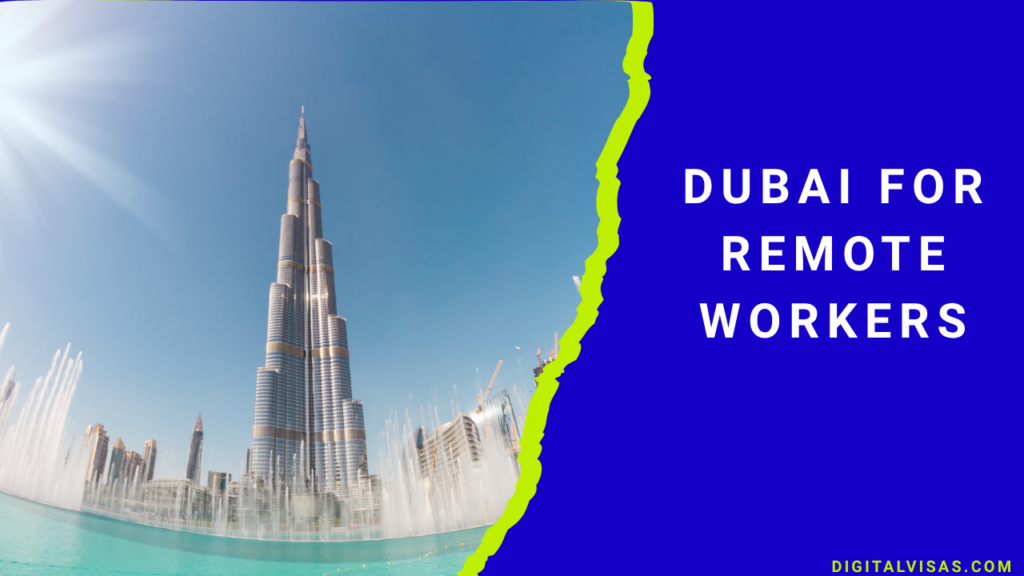
Downtown Dubai is the city’s prestigious address, home to the Burj Khalifa, Dubai Mall, Dubai Fountain, and Dubai Opera. Living here places you at the intersection of everything that makes Dubai globally recognizable, and the proximity to DIFC (Dubai International Financial Center) creates outstanding in-person networking opportunities for remote workers in finance, consulting, and professional services. One-bedroom apartments typically rent for AED 90,000 to AED 160,000 ($24,500 to $43,600) per year, among the highest in the city. The metro is accessible, and Careem coverage is seamless. Best suited for high-earning remote workers who want prestige, business networking proximity, and an iconic urban environment as their daily backdrop.
Jumeirah Village Circle (JVC)
Jumeirah Village Circle is the smartest choice for budget-conscious remote workers who want a comfortable, modern apartment without paying Dubai Marina or Downtown prices. JVC is a mid-sized residential community in New Dubai offering one-bedroom apartments from AED 40,000 to AED 65,000 ($10,900 to $17,700) per year, 30-50% less than comparable units in premium locations. The trade-off is that JVC has no metro access and requires a car or regular Careem use to reach most commercial destinations. The community is primarily residential with growing retail and café infrastructure, and it is home to a large population of young expat professionals. Best for: nomads on mid-range budgets who prioritize apartment space and savings over nightlife proximity and walkability.
Banking & Taxes in Dubai
One of the most practically important and frequently misunderstood aspects of living in Dubai as a remote worker is the banking and tax environment. Starting with the headline: the UAE has zero personal income tax. If you are a remote worker employed by a foreign company or operating as a freelancer serving international clients, your earned income is not subject to any UAE personal income tax whatsoever. This is a legally established feature of the UAE tax code, not a grey-area loophole, and it is the primary financial driver behind Dubai’s appeal to high-earning nomads. The UAE introduced a 9% corporate tax in 2023 for businesses with taxable profits exceeding AED 375,000 ($102,000), but this does not affect individual remote workers earning employment salaries or freelance income from foreign sources.
Opening a UAE bank account typically requires valid residency. You will need a UAE visa, Emirates ID, and a tenancy contract or proof of address. Major banks for expats include Emirates NBD, Mashreq Bank, RAKBANK, and ADCB. Account opening timelines run 3 to 14 business days. Banking in Dubai is modern and digital. Most banks offer robust mobile apps, international SWIFT transfers, and multi-currency account options. For nomads not yet holding UAE residency, Wise and Revolut are the most practical interim solutions for receiving international client payments in multiple currencies and spending locally without high conversion fees. The UAE dirham (AED) is pegged to the US dollar at a fixed rate of 3.67, eliminating any currency fluctuation risk for USD-earning remote workers. UAE VAT of 5% applies to goods and services purchased locally, but does not affect your earned remote income.
Safety & Quality of Life in Dubai
Dubai is genuinely one of the safest cities on earth, as consistently backed by global safety indices and the lived experience of millions of long-term residents. The violent crime rate is extremely low, street theft is uncommon, and personal safety in public spaces at any hour of the day or night is taken for granted by most residents. Women consistently report feeling safe traveling alone, taking late-night taxis, and moving through the city independently, a meaningful differentiator from many other major global cities. The legal system is strict and consistently enforced, creating a predictable, secure environment that most expats find deeply reassuring after years of managing petty crime risks elsewhere.
Healthcare quality is excellent across the board. Dubai has a robust private healthcare system with world-class facilities, including Mediclinic (multiple locations), Cleveland Clinic Abu Dhabi (reachable in under one hour), and American Hospital Dubai. Health insurance is legally mandatory for Dubai residents, and remote workers and freelancers must arrange their own coverage independently. Budget AED 3,600 to AED 9,000 ($980 to $2,450) per year for solid individual international coverage. AXA SmartTraveller, Cigna, and Now Health International are popular choices among Dubai-based nomads. Air quality is generally good, though periodic desert dust storms called shamal can reduce visibility and affect those with respiratory conditions. Overall quality of life in Dubai, as measured by objective factors such as clean streets, reliable utilities, excellent transport, world-class shopping, and cultural entertainment, is outstanding during the eight months of temperate weather that define the city’s livable season.
Step-by-Step Guide to Moving to Dubai
Moving to Dubai is a structured, sequential process, and the order in which you handle the key steps matters significantly. Unlike Southeast Asian nomad destinations, where you can arrive on a tourist visa and figure things out on the ground over weeks, Dubai’s banking, tenancy, and daily life systems all require a valid residency visa and Emirates ID to function properly. Getting your visa sorted first is, therefore, the non-negotiable foundation on which everything else is built. The nomads who have the smoothest relocations are those who complete steps one through four in sequence, not those who arrive first and try to backfill the paperwork while navigating an unfamiliar city. Follow this framework and your move will be legally sound and logistically smooth from day one.
Step 1: Choose Your Visa
Begin by identifying the visa pathway that best matches your employment status, income level, and intended duration of stay. If you are employed by a foreign company and earn more than $3,500 per month, the UAE Virtual Work Residency (Remote Work Visa) is the most accessible entry point. You will need proof of employment, three months of bank statements, a valid employment contract, and UAE-compliant health insurance. If you are self-employed or a freelancer, a Freelance Permit from a UAE free zone, such as Dubai Media City, Fujairah Creative City, or SHAMS, grants legal residency and the right to issue invoices internationally. Engage a licensed UAE visa consultancy a $200 to $500 professional fee typically saves weeks of confusion and repeated document submissions with immigration authorities.
Step 2: Plan Your Budget
Before arrival, build a detailed monthly budget covering all major cost categories: accommodation (research current rental prices on Bayut.com and Property Finder for your target area), food, transport, coworking membership, health insurance, and visa renewal costs spread across twelve months. A common and costly mistake is budgeting only for monthly running expenses while overlooking the substantial upfront costs unique to Dubai: security deposits (typically 5% of annual rent), real estate agency fees (typically 5% of annual rent), and the post-dated cheque payment structure many landlords require. Set aside a minimum of $5,000 to $8,000 as a dedicated relocation buffer above your regular monthly budget to cover the first two to three months without financial pressure.
Step 3: Find Accommodation
Use Bayut and Property Finder Dubai’s two dominant real estate platforms to research rental prices and identify target neighborhoods before you land. For your first month, book a furnished short-term apartment or serviced apartment through Airbnb or Silkhaus while you search for a longer-term rental in person. Short-term furnished apartments in mid-range areas typically cost AED 4,000 to AED 7,500 ($1,090 to $2,045) per month. Once your Emirates ID is confirmed, you can sign a formal annual tenancy contract. Always use a RERA-registered real estate agent and ensure your tenancy contract is registered on the Ejari system. This is legally required in Dubai and protects both tenant and landlord throughout the agreement period.
Step 4: Set Up Banking
Once your Emirates ID is issued, typically 2 to 4 weeks after visa approval, open a UAE bank account immediately, as it unlocks nearly every other administrative system in the country. Emirates NBD’s digital onboarding is among the fastest; Mashreq Neo and RAKBANK Digital Bank are also popular with expats for their app-first approach and low minimum balance requirements. You will need your passport, Emirates ID, UAE residency visa stamp, and proof of address (a tenancy contract or utility bill). While your account is being processed, use Wise or Revolut to receive client payments and cover daily expenses. Once your UAE account is active, notify your home-country bank of your new address and set up a reliable SWIFT or Wise transfer arrangement for moving funds internationally as needed.
Tips for Living in Dubai as a Remote Worker
The practical advice that consistently emerges from remote workers who have thrived long-term in Dubai centers on a clear set of priorities. First, always resolve your legal status before optimizing your lifestyle. Having the correct visa, a registered tenancy contract, and a functioning UAE bank account in place from day one removes a great deal of friction and unlocks everything else. Second, negotiate rent aggressively. Many Dubai landlords will offer discounts of 5 to 10% to tenants who provide fewer cheques, longer commitment periods, or flexible move-in dates. Negotiation is not just acceptable; it is expected. Third, join the right communities early. InterNations Dubai, Dubai Entrepreneurs, and industry-specific LinkedIn and WhatsApp groups are active and genuinely useful for professional networking, housing leads, and local knowledge.
Fourth, purchase a UAE SIM card immediately upon arrival. Both e& and du offer reliable 5G coverage and affordable data plans from AED 100 ($27) per month, essential for navigation, Careem, and client communication. Fifth, use the Dubai Metro along Red and Green Line corridors wherever possible; it is clean, air-conditioned, punctual, and dramatically cheaper than driving or Careem for regular journeys. Sixth, plan your summer exit strategy in advance. Many Dubai-based remote workers spend 4 to 8 weeks in Europe, Southeast Asia, or their home country during July and August. Factor in travel costs and accommodation for these trips into your annual budget from the start, not as an afterthought. Seventh, respect local cultural norms consistently: dress modestly in public, be aware of Ramadan observance periods, and understand that certain behaviors that are routine in Western cities are legally regulated in the UAE. Cultural intelligence is not optional in Dubai; it is the foundation of a comfortable, long-term residency experience.
FAQs
Is Dubai good for remote workers?
Yes, Dubai is an excellent choice for remote workers earning solid incomes in strong foreign currencies, particularly USD, GBP, or EUR. The combination of zero personal income tax, world-class digital infrastructure, exceptional personal safety, and a large English-speaking expat community creates a highly functional and professionally stimulating environment for remote work. It is especially well-suited for those in technology, finance, marketing, consulting, and creative industries who benefit from the city’s dense professional networking ecosystem. The primary requirement is a sufficiently high remote income, ideally $4,000 per month or above, to make the cost of living genuinely comfortable and the tax savings financially meaningful in practice.
Is Dubai expensive to live in?
Dubai is moderately to significantly expensive, depending entirely on your lifestyle choices. Accommodation is the dominant cost, with one-bedroom apartments ranging from $10,900 per year in affordable areas like JVC to over $43,000 in premium Downtown locations. Food ranges widely; local restaurants are very affordable at $4 to $8 per meal, while international dining and beach clubs are expensive. A realistic mid-range remote worker budget runs $2,500 to $4,000 per month, all-inclusive. This figure is lower than the equivalent in London, New York, or Sydney, and it comes with zero personal income tax, which fundamentally changes the financial equation for most foreign-income earners evaluating Dubai’s true cost of living.
Can I legally work remotely in Dubai?
Yes, working remotely in Dubai is fully legal with the correct visa in place. The UAE Virtual Work Residency (Remote Work Visa) is the primary pathway for employed remote workers, requiring proof of employment by a foreign company, a minimum monthly income threshold of approximately $3,500, and valid UAE health insurance. Self-employed freelancers and independent contractors should obtain a Freelance Permit through a UAE free zone such as Dubai Media City, Fujairah Creative City, or SHAMS Sharjah. Working in Dubai on a tourist visa without a valid work permit is illegal and carries real risks. Engaging a licensed UAE visa consultancy ensures your setup is compliant and properly documented from day one.
Is Dubai tax-free?
For personal income, yes, the UAE has no personal income tax, meaning your remote salary or freelance earnings are not subject to any UAE deduction. This applies whether your income comes from a foreign employer or international clients. The UAE introduced a 9% corporate tax in June 2023, but this applies only to businesses with taxable profits exceeding AED 375,000 ($102,000) and does not affect individual remote workers earning employment or freelance income. A 5% VAT applies to goods and services you purchase locally, but does not reduce your earned income. For high-income remote workers, the annual tax savings compared to paying 20 to 45% in their home countries can amount to $20,000 to $80,000 or more a transformative financial advantage over multi-year residency.
What is the best area to live in Dubai?
The best area depends entirely on your budget and lifestyle priorities. Dubai Marina is the top choice for expats and remote workers wanting a walkable, social, beach-adjacent lifestyle with excellent metro connectivity. Expect to pay AED 70,000 to AED 120,000 per year for a one-bedroom. Downtown Dubai appeals to high earners seeking prestige, proximity to DIFC, and an iconic urban environment. Jumeirah Village Circle (JVC) is the smart mid-range pick for remote workers who prioritize a spacious, modern apartment at a significantly lower cost, with one-bedrooms from AED 40,000 to AED 65,000 per year. Always spend at least two weeks exploring different neighborhoods in person before signing any long-term lease.
Conclusion
Dubai is not the right destination for every remote worker, but for the right profile of person, it may be the most financially and professionally powerful relocation decision available in 2026. The combination of zero personal income tax, world-class infrastructure, exceptional personal safety, a cosmopolitan and ambitious expat culture, and increasingly accessible visa pathways for remote workers creates a genuinely compelling case for high-earning, location-independent professionals who are serious about building wealth and career momentum simultaneously.
The key requirements are straightforward and honest: a solid remote income of $4,000 per month or more, a willingness to engage respectfully with the UAE’s cultural and legal framework, and a practical plan for navigating the summer heat. If those conditions fit your situation, Dubai offers a lifestyle that very few other cities in the world can match across the full combination of financial efficiency, safety, professional opportunity, and global connectivity. Use this guide as your strategic planning foundation. Resolve your visa first, budget realistically, negotiate your rent, and invest consistently in building your professional community. Dubai rewards the prepared, and for remote workers who approach it with clarity and strategy, it delivers on its promise.