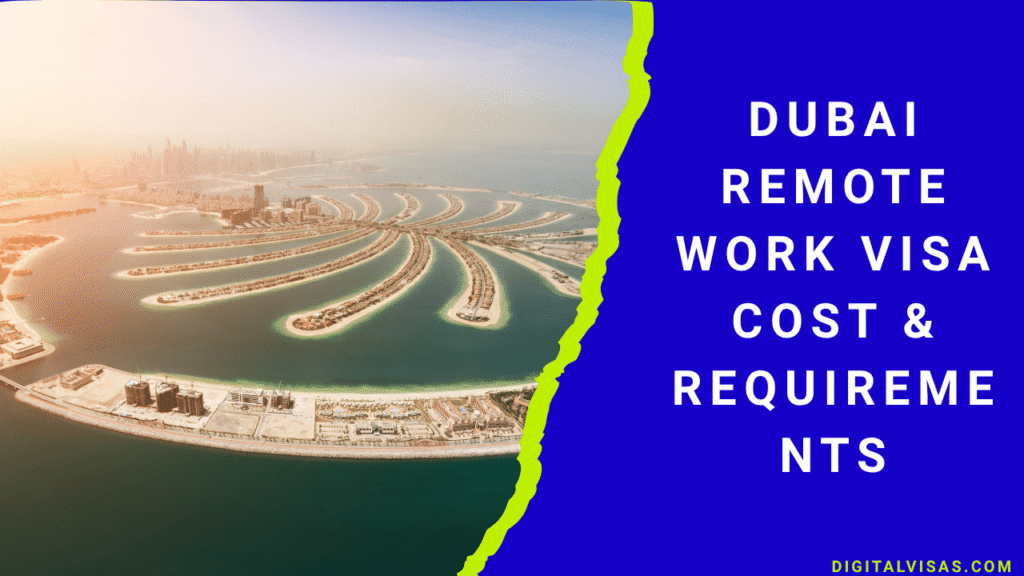
Dubai Remote Work Visa Cost & Requirements (Step-by-Step Guide)
Dubai has firmly established itself as a global magnet for digital nomads, freelancers, and remote corporate employees. As we move into 2026, the Dubai remote work visa costs and requirements have evolved to remain competitive in an increasingly crowded global talent market. Formally known as the Virtual Working Program, this residency permit allows individuals to live in one of the world’s most futuristic cities while continuing to work for employers or clients based outside the United Arab Emirates.
Whether you are escaping the cold winters of Europe or seeking a more tax-efficient lifestyle than what is available in North America, Dubai offers a unique blend of high-end infrastructure and a strategic geographic location. In this guide, we will break down every financial and administrative detail you need to know to make your move a success this year, ensuring your application process is as seamless as the city’s famous skyline.
What is the Dubai Remote Work Visa?
The Dubai Remote Work Visa is a one-year residency permit that allows foreign professionals to reside in the UAE while working remotely for their current employer or their own company located abroad. Launched in response to a shifting global work culture, this program bridges the gap between a standard tourist visa and a long-term employment visa. Unlike a traditional work visa, you do not need a local UAE sponsor or a domestic labor contract. Instead, your “sponsor” is essentially your own remote income stream.
In 2026, the program remains a cornerstone of Dubai’s “D33” economic agenda, aiming to attract the world’s brightest minds to help build a digital-first economy. This initiative reflects Dubai’s commitment to becoming the world’s leading hub for the future of work, offering a stable and regulated environment for those who have ditched the traditional office cubicle.
Overview of the Virtual Working Program
The Virtual Working Program is unique because it grants you most of the rights afforded to regular UAE residents. Once your visa is approved, you receive an Emirates ID, which is the golden key to life in Dubai. This identification card allows you to open a local bank account, sign a residential lease, register a vehicle, and even enroll your children in local schools.
It is specifically designed for the “laptop lifestyle,” ensuring that while your income is earned globally, your life is lived locally. In 2026, the digital infrastructure in Dubai has reached new heights, with 6G trials and widespread high-speed fiber optics making it a seamless transition for tech-heavy professionals. The program essentially lets you “test drive” living in the UAE without the long-term commitment of an investment visa, offering the flexibility modern remote workers crave.
Who Can Apply for the Dubai Remote Work Visa?
This visa is inclusive, but it targets three specific profiles: remote employees, business owners, and specialized freelancers. If you are an employee, your company must be based outside the UAE, and they must provide a letter of “no objection” or proof of your remote status. If you are a business owner, you must prove ownership of a company that has been active for at least one year. The program is open to all nationalities, making it highly popular for citizens from India, the UK, and the USA.
However, the core requirement remains your ability to prove financial self-sufficiency. It is not intended for those seeking work in the UAE; if you find a local job, you must transition to a standard employment visa. The goal is to attract high-earning individuals who contribute to the local economy through consumption and spending while maintaining their professional ties abroad.
Dubai Digital Nomad Visa Requirements (2026)
To maintain its status as a premium destination, Dubai enforces strict but transparent Dubai digital nomad visa requirements. These benchmarks ensure that applicants can support themselves without relying on the local welfare state and can contribute to the local economy. In 2026, the documentation process has been further streamlined through the General Directorate of Residency and Foreigners Affairs (GDRFA) and the Dubai Department of Economy and Tourism (DET) portals.
The focus remains on two pillars: proof of professional status and proof of consistent financial liquidity. Understanding these requirements is the most critical step in avoiding a swift rejection of your application. Failure to provide even a single document in the correct format can lead to delays, making it imperative that you audit your paperwork against the official 2026 checklist before submission.
Income Requirement and Thresholds
The most vital requirement for the Dubai remote work visa is the income threshold. As of 2026, you must demonstrate a minimum monthly income of $3,500 USD (or the equivalent in other currencies). This is a slight adjustment from previous years to account for global inflation and the rising cost of living in the Emirate. You must prove this income through official payroll slips or official bank statements. If you are a freelancer with fluctuating income, the authorities typically look at your average earnings over the last three to six months.
Providing evidence of high-value, long-term contracts can significantly bolster your application if your monthly revenue is close to the minimum limit. It is important to note that this income must be sustainable; providing a one-off payment or a temporary bonus will likely not satisfy immigration officers looking for financial stability.
Proof of Employment or Ownership
You must provide concrete evidence of your professional standing. For employees, this means an employment contract valid for at least one more year and a letter from your employer confirming your remote work arrangement. For business owners, you must provide proof of ownership of the company for one year or more.
This usually involves submitting your Articles of Incorporation or a valid Trade License from your home jurisdiction. In 2026, the Dubai authorities have become more adept at verifying digital business structures, so ensuring your company documentation is translated (if not in English or Arabic) and notarized is essential for a smooth approval process. The authorities need to ensure that your source of income is legitimate and that your business entity is in good standing in its home country.
Bank Statements and Financial Transparency
Transparency is key when dealing with UAE immigration. You are required to submit at least three months of personal bank statements that clearly show the “salary credit” or business revenue deposits matching your income claims. The names on your bank statements must exactly match the name on your passport. In 2026, authorities are increasingly looking for “clean” statements that show consistent activity.
Large, unexplained lump-sum deposits just before the application might trigger a request for additional documentation. It is best to provide clear, stamped digital statements from your bank to ensure there are no questions regarding the authenticity of your financial history. If you use multiple accounts to receive income, ensure you provide a consolidated view or clear explanations to help the processing officer understand your financial flow.
Health Insurance Requirements
You cannot live in Dubai without valid health insurance. For the remote work visa, you must have a policy that provides coverage within the UAE. While many international travel insurances for digital nomads are accepted, they must explicitly state that they cover “medical emergencies and hospitalization in the UAE.” Once you arrive and receive your Emirates ID, many nomads choose to switch to a local UAE-based insurer, such as Daman or AXA Gulf, as these provide much smoother integration with local clinics and hospitals.
In 2026, having a comprehensive policy is non-negotiable, as medical costs in Dubai can be extremely high for those without adequate coverage. You will be required to upload your insurance certificate during the online application phase, and any policy that lacks clear UAE coverage wording will be rejected immediately.
Essential Documentation Checklist
Before hitting the “submit” button, ensure you have the following documents ready in high-resolution PDF format. First, a passport with at least six months of validity remaining. Second, a digital passport-sized photo with a white background. Third, your proof of income (pay slips or company profit/loss statements). Fourth, the proof of employment or company ownership. Finally, your health insurance certificate. In some countries, you may also be asked for a police clearance certificate, though this is not a universal requirement for the remote work category. Having these documents organized prevents delays in the “Request for Information” stage of the application. Organization is your best friend here; naming your files clearly (e.g., “John_Doe_Passport.pdf”) helps the immigration officers process your file much faster.
Cost Breakdown: What to Expect in 2026
Budgeting for your move is critical. The Dubai remote work visa costs are relatively affordable compared to the potential tax savings, but there are several layers of fees to consider. The initial application fee is just the beginning; you must also factor in the costs of the medical fitness test, the Emirates ID issuance, and potential “change of status” fees if you are already inside the country on a tourist visa.
By 2026, total government-related costs will hover between $600 and $800 USD per person. This does not include the cost of your health insurance or the security deposit for your first apartment, which we will discuss in the lifestyle sections. Being prepared for these “entry costs” ensures you don’t face a liquidity crunch as soon as you land in the city of gold.
Primary Visa and Application Fees
The core application fee for the Virtual Working Program is approximately $287 USD. This fee covers the processing of your initial entry permit or the transition of your current status. If you are applying from outside the UAE, you will receive an entry permit that allows you to enter the country to complete the final steps.
If you are already in Dubai, you will pay an additional “In-Country Status Change” fee of roughly $180 USD. These fees are non-refundable, even if your application is rejected, which is why double-checking your income documentation against the requirements is so important before you pay. The payment is usually made via the official government portals using a major credit card, and you should keep the digital receipt for your records as you move through the subsequent stages.
Additional Costs: Medical and Emirates ID
Once your initial application is approved, you must undergo a medical fitness test, which checks for communicable diseases like HIV and Tuberculosis. This test typically costs around $80 to $100 USD, depending on whether you choose a “VIP” or regular service. Following the medical test, you must apply for your Emirates ID.
The fee for a one-year ID card is approximately $100 USD. Furthermore, there may be small administrative fees for document typing and courier services to deliver your physical ID. In 2026, many of these processes are handled via the “Dubai Now” app, but the physical presence for blood tests and biometrics (fingerprinting) is still mandatory for all new residents. These costs are fixed by the government and are subject to minor annual adjustments, but budgeting $300 USD for this final phase is a safe bet.
Cost of Living in Dubai for Remote Workers
Understanding the cost of living in Dubai is essential for any remote worker. While the visa itself is affordable, Dubai is a city of luxury, and expenses can scale quickly. However, it is also a city of choices; you can live a modest life in quieter neighborhoods or a high-end lifestyle in the Marina. In 2026, the rental market has stabilized somewhat after the post-pandemic surge, but high demand remains.
A single digital nomad should budget at least $2,500 to $3,500 USD per month to live comfortably, including rent, food, transport, and leisure. This fits perfectly with the $3,500 income requirement, ensuring you aren’t living “paycheck to paycheck” in the desert. Having a clear grasp of your monthly burn rate will help you enjoy the city without the stress of financial overextension.
Monthly Expenses Breakdown
Your largest expense will undoubtedly be rent. A studio or one-bedroom apartment in popular areas like Jumeirah Village Circle (JVC) or Business Bay can cost between $1,200 and $2,000 USD per month. Utilities, including the “DEWA” bill (water and electricity) and high-speed internet, will add another $200 to $300 USD.
Groceries are comparable to major Western cities like London or New York, especially if you shop at local markets rather than high-end imported food stores. Dining out is a major part of Dubai culture, with “Budget” meals costing $10 and “Fine Dining” reaching $200+ per person. Transportation is efficient, with the Metro being very affordable, while a monthly car rental might cost $500 to $700 USD. By planning for these specific categories, you can tailor your lifestyle to match your remote salary precisely.
Is Dubai Expensive for Digital Nomads?
The answer is: it depends on your lifestyle. Compared to Southeast Asian hubs like Bali or Chiang Mai, Dubai is significantly more expensive. However, compared to San Francisco, London, or Singapore, Dubai offers better value, especially when you factor in the “all-in” quality of life. In 2026, the lack of a personal income tax means your gross salary is your net salary, effectively giving many Westerners a 20-40% “raise” immediately.
This tax efficiency often offsets the higher cost of rent and dining. Additionally, the safety, infrastructure, and central location for travel often justify the higher price tag for professional remote workers who prioritize productivity and networking over low-cost living. For those earning in USD, GBP, or EUR, the relative strength of their currency often makes Dubai feel more accessible than for those earning in developing market currencies.
Step-by-Step Application Process
Navigating the Dubai virtual working visa application is a digital-first experience. In 2026, the process is largely automated, but it still requires a specific sequence of actions to ensure success. Most applicants complete the entire process within 30 days, from the initial document upload to receiving the physical Emirates ID.
The process is managed through the official Visit Dubai website or the GDRFA portal. Following the steps correctly prevents the common “administrative loop” where applications are sent back for minor corrections, which can add weeks to your timeline. Let’s look at the four major steps involved in the 2026 application cycle, designed to get you from your current home to a Dubai co-working space in record time.
Step 1: Document Preparation and Pre-Check
Before you even open the application portal, you must have your “digital folder” ready. This includes scanning your passport (a color scan; all pages are not required; just the biodata page), your employment letter or company license, and your 3-month bank statement. Crucially, in 2026, ensure your bank statements are in PDF format directly from your banking portal; scanned paper copies are sometimes rejected for lack of clarity.
If your documents are not in English, you should have them translated by a certified legal translator. This step is where most mistakes happen, so take an extra day to ensure every name and date matches your passport exactly. A small typo in your company name or passport number can lead to an automatic rejection, so attention to detail is paramount here.
Step 2: Online Application and Fee Payment
Once your documents are ready, you will head to the official Dubai Department of Economy and Tourism (DET) portal for the Virtual Working Program. You will enter your personal details, upload your documents, and pay the initial processing fee by credit card. After submission, your application enters the “Review” stage.
In 2026, the initial review typically takes 5 to 10 business days. During this time, an immigration officer will verify your income and employment status. If they need more information, you will receive an email; it is vital to respond within 48 hours to keep your application active in the system. The portal is user-friendly, but ensure you have a stable internet connection when uploading large files to avoid timeout errors.
Step 3: Receiving the Entry Permit and Arrival
If your application is approved, you will receive an electronic Entry Permit via email. If you are outside the UAE, you print this and show it at the airport upon arrival. If you are already in the country, this document marks the start of your “status change.” This permit is valid for 60 days, giving you ample time to enter Dubai and begin the residency formalities.
Upon entry, the immigration officer will stamp your passport, or if you use the e-gates, your entry will be logged digitally. This is the moment your one-year residency officially begins its countdown, though you are not yet a “resident” until the medical and ID steps are finished. It is a moment of great excitement, as it officially marks your transition to a Dubai resident-to-be.
Step 4: Medical Testing and Emirates ID Issuance
The final hurdle is the medical fitness test and biometrics. You will visit a certified DHA (Dubai Health Authority) medical center. The process is quick: a blood test and a chest X-ray. Once the results are clear (usually within 24–48 hours), you proceed to a Federal Authority for Identity and Citizenship (ICP) center for fingerprinting and a retina scan.
This is required for your first Emirates ID. Once biometrics are done, your residency visa is stamped into your passport (or issued digitally), and your physical Emirates ID is couriered to your Dubai address. In 2026, your “digital ID” via the UAE Pass app is available almost instantly after the medical is cleared, allowing you to begin using government services even before the physical card arrives.
Processing Time for the Remote Work Visa
Efficiency is a hallmark of Dubai’s government services. In 2026, the processing time for a Dubai remote work visa is remarkably short compared to European digital nomad visas, which can take months. Generally, the entire cycle from the first application to receiving your Emirates ID takes between 2 and 4 weeks.
The initial approval (entry permit) takes 5–10 days, the medical results take 2 days, and the Emirates ID takes about 5–7 days to be printed and delivered. If you use “Express” or “VIP” services for the medical and biometrics, you can shave a few days off this timeline, making it one of the fastest residency programs in the world. This speed is a major selling point for nomads who need to move quickly due to expiring leases or shifting project timelines.
Benefits of Living in Dubai as a Remote Worker
Why choose Dubai over other hubs? The benefits of the Dubai virtual working visa go beyond just the sun and sand. In 2026, Dubai has become a “Network State” of sorts, where the world’s most successful entrepreneurs congregate. The city is designed for convenience; everything from groceries to car washes can be ordered via an app.
For a remote worker, this means less time spent on “life admin” and more time spent on work or leisure. Furthermore, the time zone (GMT+4) is a “sweet spot” that allows you to communicate with Asia in the morning, Europe all day, and the US East Coast in the late evening. It is the ultimate productivity hack for those managing global teams or clients across multiple continents.
Lifestyle and Infrastructure
The quality of life in Dubai is arguably unmatched in terms of modern infrastructure. You have access to some of the world’s best gyms, co-working spaces (like Nook or AstroLabs), and high-speed public transport. The city is incredibly safe, consistently ranking among the safest cities globally for solo travelers and families alike.
In 2026, the “15-minute city” concept was integrated into several Dubai neighborhoods, meaning work, fitness, and dining are all within a short walk or scooter ride. Whether you enjoy skydiving on the weekend or quiet afternoons in a luxury cafe, the lifestyle caters to every possible niche of the remote work community. The city’s entertainment calendar is also packed year-round with world-class concerts, sporting events, and cultural festivals that keep life exciting.
Tax Benefits and Financial Incentives
The biggest financial draw is the 0% personal income tax. While the UAE introduced a 9% corporate tax in 2023 for businesses earning over 375,000 AED, remote workers on this specific visa typically remain exempt as they are not “conducting business” within the UAE mainland. You earn your salary abroad and keep 100% of it.
There are no capital gains taxes or inheritance taxes for residents either. This allows for rapid wealth accumulation. However, it is essential to consult with a tax advisor in your home country (especially if you are a US citizen) to understand your ongoing tax obligations to your country of citizenship while residing in Dubai. For many, the tax savings alone are enough to fund a much higher standard of living than they could afford back home.
Pros and Cons of the Dubai Remote Work Visa
No relocation is perfect, and it is important to have a balanced view. While the Dubai remote work visa requirements are clear, living in the desert comes with its challenges. In 2026, as the city becomes more crowded, certain “cons” have become more apparent, such as traffic and the rising cost of prime real estate. Conversely, the “pros” have also strengthened, including a more mature tech ecosystem and better legal protections for tenants and residents.
Weighing these factors is essential before committing to the one-year program, as moving costs can be high if you decide the city isn’t right for you after only a few months. A holistic view will ensure that you move with eyes wide open to both the glamor and the practicalities of Middle Eastern expat life.
The Pros: Why You Should Move
The primary advantage is the “frictionless” life. Dubai is built for expats, with over 80% of the population being foreign-born. English is the lingua franca, so there is no language barrier. The safety levels mean you can walk anywhere at 3 AM without a second thought. For remote workers, the networking opportunities are unparalleled; a random Tuesday coffee could lead to a partnership with a global startup.
Additionally, the travel connectivity via Emirates and FlyDubai makes it easy to explore Africa, Europe, and Asia during your “workcations.” The visa itself is also renewable, providing a clear path for those who fall in love with the city and want to stay longer. It’s a place where the ambitious thrive and the lifestyle supports a high-performance mindset.
The Cons: Potential Challenges
The biggest challenge is the climate. From June to September, temperatures regularly exceed 40°C (104°F), and humidity is high, making outdoor activities nearly impossible during the day. This can lead to “mall fatigue” or a sense of isolation if you are not prepared for an indoor lifestyle for part of the year. Another con is the cost of “vices”: alcohol and high-end entertainment are heavily taxed and expensive.
Finally, while there is no income tax, there are many “hidden” fees, including knowledge and innovation fees, as well as high service charges on everything from housing to dining. It is a city where money can disappear quickly if you are not disciplined with your budget. Understanding these trade-offs is vital for a successful long-term stay.
Dubai vs. Portugal vs. Spain: Which Nomad Visa is Best?
In 2026, remote workers are spoiled for choice. How does Dubai stack up against European favorites? Portugal’s D8 visa and Spain’s Digital Nomad Visa offer a path to EU permanent residency and citizenship, which Dubai does not. However, the tax situation in Europe is far more complex, with high social security contributions and income taxes reaching up to 48% in some cases.
Dubai is better for “wealth builders” who want to maximize their take-home pay, while Portugal or Spain are better for “lifestyle seekers” who prioritize the ability to settle permanently in Europe. Dubai’s process is also significantly faster, taking weeks rather than the 6–12 months often seen in Spain or Portugal. Ultimately, if your goal is immediate cash flow and high-tech living, Dubai wins; if your goal is an EU passport, look toward the Mediterranean.
Tips for a Successful Approval
To ensure your application for the Dubai remote work visa is approved on the first try, follow these expert tips. First, ensure your bank statements are not just “summaries”; they must show the transaction history of your salary landing. Second, if you are a freelancer, categorize your income clearly. Third, check your passport validity; if it expires in 7 months, renew it before applying for the visa to avoid issues with the one-year residency period. Finally, be honest about your professional background.
The UAE authorities use advanced screening, and any discrepancies in your employment history or company status can result in a permanent ban on future visa applications. It’s always better to over-explain a situation in your cover letter than to leave a gap that looks suspicious to an immigration officer.
Common Mistakes to Avoid
Many applicants fail because of simple, avoidable errors. One common mistake is providing a “savings” account statement that doesn’t show a recurring income stream. The visa is based on current income, not just having a large bank balance. Another mistake is using travel insurance that doesn’t meet the specific UAE health coverage criteria. Many nomads also forget to factor in the “In-Country” fee if they are already in Dubai, leading to a surprise $180 charge. Lastly, do not cancel your current visa or leave your current job until you have the entry permit in hand.
The “Virtual Working Program” requires you to be currently employed or own a business to be eligible. Staying employed throughout the transition is the safest way to ensure your financial credentials remain valid in the UAE government’s eyes.
Frequently Asked Questions
What is the minimum income for the Dubai remote work visa in 2026?
As of 2026, the minimum monthly income requirement for the Dubai remote work visa is $3,500 USD. This must be proven through at least three months of bank statements and official pay slips. This threshold applies to both employees and business owners. If your income is in a different currency, it will be calculated based on the exchange rate at the time of your application. It is advisable to show slightly above the minimum to account for any currency fluctuations that might occur during the review process. This requirement ensures that you have enough liquidity to support yourself in a city where housing and lifestyle costs can be substantial.
Can I bring my family on the Dubai remote work visa?
Yes, one of the greatest features of this program is that once your own visa is approved, you can sponsor your spouse and children. You will need to provide legalized marriage and birth certificates (attested by the UAE embassy in your home country and the Ministry of Foreign Affairs in Dubai).
You must also demonstrate that you have a residential lease (Ejari) and sufficient income to support your dependents. The cost per dependent is similar to the main applicant’s, including separate medical tests and Emirates ID fees. This makes Dubai a highly attractive option for established professionals with families who want to experience international living together.
Is the Dubai remote work visa renewable?
The visa is valid for one year and is absolutely renewable. To renew, you must go through a similar process to the initial application, proving that you still meet the $3,500 monthly income requirement and that your remote work arrangement is still active. There is no limit to how many times you can renew, provided you continue to meet the eligibility criteria. However, if you spend more than six consecutive months outside of the UAE, your residency visa will automatically become invalid, and you will need to reapply from scratch. This policy ensures that the visa is used by those who truly reside in the Emirate rather than as a travel document.
Do I need to pay taxes in the UAE on this visa?
Under the remote work visa, you are not subject to UAE personal income tax. The UAE does not tax individuals on their worldwide income. However, since you are working for a company or owning a business abroad, you may still have tax obligations in the country where your income is sourced or where your company is registered. It is your responsibility to manage your tax residency status. Many digital nomads use their UAE residency to establish a new tax home, but this requires careful legal planning and usually staying in the UAE for at least 183 days a year. Always consult a professional tax advisor to ensure compliance with your home country’s tax laws.
Can I work for a UAE-based company on this visa?
No, the Dubai virtual working visa is strictly for remote work for employers or companies located outside the UAE. If you decide to take a job with a local Dubai-based company, you must cancel your remote work visa and have your new employer sponsor you for a standard UAE labor contract and residency visa. Engaging in local employment while on a virtual work visa is a violation of the visa terms and can lead to fines or deportation. This visa is specifically designed to bring external human capital into the local economy without impacting the local job market. It’s a win-win for the city and for the global remote worker who wants to enjoy Dubai’s perks.
Conclusion
The Dubai remote work visa costs and requirements for 2026 offer a clear, efficient path for global professionals to enjoy a tax-free, high-infrastructure lifestyle in the heart of the Middle East. While the $3,500 income requirement and the approximately $800 in total fees are barriers to entry, the return on investment in terms of safety, networking, and quality of life is substantial. Dubai remains a top-tier choice for those who want to be at the center of global trade and innovation.
By following the steps outlined in this guide and ensuring your documentation is flawless, you can join the thousands of digital nomads who call this desert metropolis home. Whether you stay for a year or a decade, living in Dubai is bound to transform your professional and personal perspective, offering you a unique vantage point on the global economy from one of its most dynamic and ambitious hubs.